
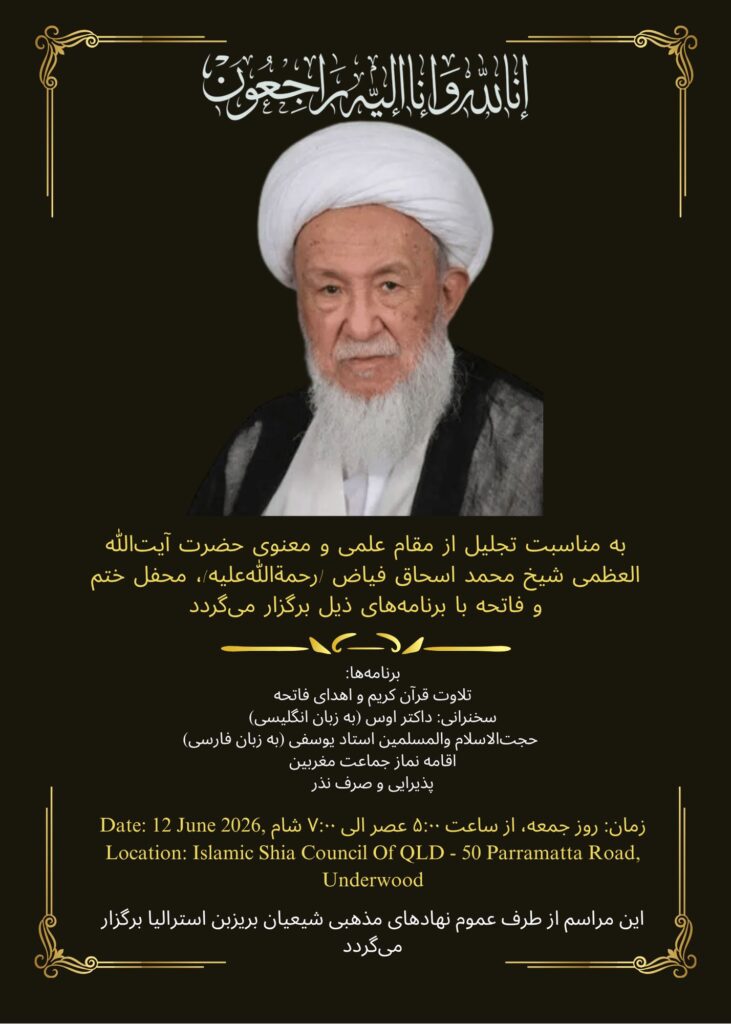
Statement of the Islamic Centres and Hazara Community Organisations of Australia on the Passing of Grand Ayatollah Sheikh Muhammad Ishaq Fayyad
We, the undersigned Islamic Centres and Hazara Community Organisations, are deeply sad for the passing of Shi’a Islamic scholar and distinguished jurist Grand Ayatollah Sheikh Muhammad Ishaq Fayyad in Najaf, Iraq, on 4 June 2026. His death constitutes a great loss for his Shi’a followers, the Hazara community in Australia and the entire Islamic world.
We extend our condolences for the passing of Grand Ayatollah Fayyad to His Eminence Imam al-Mahdi (may Allah hasten his reappearance), the Islamic world, the religious seminaries, his followers and respected family, and our broader Hazara community in Australia.
Grand Ayatollah Fayyad was born in 1930 in a poor farming family in Jaghori District of Ghazni Province, Afghanistan. Despite experiencing poverty, discrimination, and hardship during his childhood, he travelled from his village to Iraq where he worked hard and rose from the depth of deprivation and marginalisation to achieve the title of Grand Ayatollah (i.e., the highest rank in Shi’a religious studies), virtue, and authority.
At the time of his passing on 4 June 2026, he was a leading and highly respected religious authority of the Shi’a Islamic world and a spiritual guide for millions of believers around the world, including in Australia.
For more than half a century, his teaching in the city of Najaf, Iraq, served as one of the most influential scholarly circles amongst the Shi’a Muslims. He made significant contributions to the fields of Islamic jurisprudence (fiqh), legal theory (usul al-fiqh) and religious biographical studies (rijal).
Below are some of his most prominent religious and socio-political contributions:
– Grand Ayatollah Fayyad advocated for religious tolerance and peaceful coexistence with other communities. He explicitly warned his followers against religious extremism, fanaticism, and the promotion of hatred.
– In response to questions concerning the role of women in society, which were later compiled in his book, The Status of Women in Islamic Political System, he considered it permissible for women to occupy public offices including as head of government and judiciary.
“I do not see any difference between men and women in society. A woman may work while maintaining her hijab, dignity, and honour. There is no obstacle to her undertaking any task she is capable of performing; in my view, she may even become president. Experience today has shown that women often demonstrate greater dedication than men. For example, female students frequently show greater commitment than their male counterparts at universities. I do not distinguish between men and women in matters of judicial authority or religious leadership. If a woman acquires the necessary knowledge and becomes a marja’ (source of emulation), what objection could there be?”
He called for Muslim unity and advised his followers to abide by laws and regulations of any country that they live in. He asked his followers to represent their faith and religious culture through understanding and positive behaviour.
He opposed personal deception and political manipulation. He reportedly stated that “ethics, commitment, and piety are essential conditions for religious political engagement, although such principles are unfortunately observed too rarely today.”
Grand Ayatollah Fayyad was committed to scholarly understanding of Islamic religion throughout his life. He also devoted his life to worship and community service.
We respect the life and example of this distinguished scholar as a model of faith, religious tolerance and service to humanity. While striving to follow his example, we consider his passing a profound loss not only for the Hazara community in Australia but for the entire Islamic world.
We also take this opportunity to sincerely thank our fellow Muslims, particularly the followers of Ahl al-Bayt (peace be upon them), who expressed their sympathy and solidarity through various means since the passing of the Grand Ayatollah Fayyad. We are especially grateful to the people and government of our brotherly nation, Iraq, who demonstrated utmost respect and appreciation for Grand Ayatollah both during his study and teaching in Najaf and his funeral ceremony.
We believe that such honor and respect for Grand Ayatollah Fayyad in Iraq will further strengthen the bonds of solidarity, friendship, and mutual respect between the peoples of Iraq and Afghanistan, particularly among the followers of the Ahl al-Bayt.
We kindly ask our community members in Australia to seek inspiration from the wise guidance of Grand Ayatollah Fayyad. His life and scholarship would help us to strengthen internal unity and continue to live peacefully with other communities in Australia.
بسم الله الرحمن الرحیم
بیانیه مراکز اسلامی و نهادهای مدنی هزارههای آسترالیا در پی ارتحال جانسوز مرجع عالیقدر جهان تشیع، حضرت آیتالله العظمی شیخ محمد اسحاق فیاض (قدس سره الشریف)
«إِنَّا لِلّهِ وَإِنَّا إِلَيْهِ رَاجِعُونَ»
ارتحال جانگداز فقیه ربانی، مرجع عالیمقام، استاد برجسته حوزه علمیه نجف اشرف و محقق وارسته، حضرت آیتالله العظمی شیخ محمد اسحاق فیاض (قدس سره الشریف)، ضایعهای عظیم و اندوهی عمیق برای جهان اسلام، حوزههای علمیه، جامعه مؤمنان و تمامی دلدادگان مکتب اهلبیت عصمت و طهارت (علیهمالسلام) به شمار میرود.
آن مرجع فرزانه از برجستهترین چهرههای فقاهت و اجتهاد در عصر حاضر و از استوانههای استوار حوزه علمیه نجف اشرف بود که عمر شریف خویش را در راه تحصیل، تحقیق، تدریس، تربیت شاگردان و پاسداری از معارف ناب اسلامی سپری نمود. رحلت ایشان، فقدان شخصیتی است که دههها در قله دانش دینی، زهد، تقوا و خدمت به امت اسلامی قرار داشت و آثار علمی و معنوی وی تا نسلها الهامبخش عالمان و حقیقتجویان خواهد بود.
حضرت آیتالله العظمی فیاض (ره) در سال ۱۳۰۹ خورشیدی در ولسوالی جاغوری ولایت غزنی، در خانوادهای متدین، شریف و سختکوش از جامعه هزاره دیده به جهان گشود. دوران کودکی و جوانی ایشان با دشواریهای ناشی از فقر و محرومیت همراه بود، اما اراده استوار، استعداد کمنظیر و پشتکار مثالزدنی ایشان سبب شد تا مسیر کمال علمی و معنوی را با موفقیت بپیماید و از میان دشواریهای فراوان به جایگاه رفیع مرجعیت و زعامت علمی جهان تشیع دست یابد.
حضور بیش از نیم قرن آن عالم ربانی بر کرسی تدریس حوزه علمیه نجف اشرف و برپایی مستمر درس خارج فقه و اصول، حوزه علمی ایشان را به یکی از پربارترین و تأثیرگذارترین محافل علمی جهان تشیع تبدیل کرد. تسلط کمنظیر ایشان بر علوم فقه، اصول، رجال، حدیث و مسائل اجتماعی معاصر، موجب شد که در شمار برجستهترین فقهای روزگار قرار گیرد و آثار ارزشمند علمی ایشان به عنوان بخشی از میراث ماندگار حوزه نجف در اختیار نسلهای آینده باقی بماند.
از ویژگیهای برجسته علمی و فکری آن مرجع فقید، تأکید بر اعتدال، مدارا، عقلانیت و اخلاق اسلامی بود. ایشان همواره پیروان مکتب اهلبیت (علیهمالسلام) را به پرهیز از افراطگرایی، تندروی، تعصب و نفرتپراکنی فرا میخواند و بر ضرورت احترام به کرامت انسانی و حسن معاشرت با همه انسانها تأکید میورزید.
در عرصه مسائل اجتماعی و فقه معاصر نیز دیدگاههای ایشان از عمق اجتهادی و نگاه واقعبینانه به تحولات زمانه حکایت داشت. از جمله در مباحث مربوط به جایگاه زنان، با تکیه بر مبانی اجتهادی خویش، نقشآفرینی بانوان را در عرصههای مختلف اجتماعی، علمی و سیاسی مورد تأیید قرار داده و بر حفظ کرامت انسانی، شایستگی و توانمندی زنان تأکید مینمود.
حضرت آیتالله العظمی فیاض (ره) همچنین از منادیان برجسته وحدت اسلامی و همزیستی مسالمتآمیز میان جوامع انسانی بود. ایشان مسلمانان را به رعایت قوانین کشورهای محل زندگی، احترام به نظم اجتماعی، دوری از تنش و ایفای نقش مثبت در جوامع دعوت میکرد و معتقد بود که بهترین نمایندگی از دین، اخلاق نیکو، رفتار مسئولانه و خدمت صادقانه به مردم است.
آن فقیه بزرگوار در تمام مراحل زندگی خویش، استقلال علمی، پاکدامنی، زهد، پارسایی و تعهد دینی را حفظ نمود و هیچگاه جایگاه علمی و معنوی خود را با مصلحتهای زودگذر دنیوی درنیامیخت. همین ویژگیها موجب شد که نام و شخصیت ایشان به عنوان الگویی از صداقت، اخلاص، استقامت و وفاداری به ارزشهای الهی در حافظه تاریخی جهان تشیع ماندگار گردد.
ما مراکز اسلامی و نهادهای مدنی هزارههای آسترالیا، ضمن ابراز عمیقترین مراتب تأثر و اندوه خویش از این مصیبت بزرگ، سیره علمی و عملی آن عالم ربانی را الگویی ارزشمند برای دینداری آگاهانه، اعتدال، مدارا، تلاش علمی، خدمت به مردم و پاسداری از ارزشهای انسانی و اسلامی میدانیم و بر ضرورت معرفی و ترویج این میراث گرانسنگ در میان نسلهای آینده تأکید میورزیم.
همچنین لازم میدانیم از همه علما، اندیشمندان، شخصیتهای دینی، نهادهای اسلامی و تمامی انسانهای نیکاندیش که در پی ارتحال آن مرجع فقید با پیامها و ابراز همدردیهای خویش در این اندوه بزرگ شریک شدند، صمیمانه قدردانی نماییم. به طور ویژه از ملت شریف و دولت جمهوری عراق که در دوران حیات و پس از ارتحال آن مرجع عالیقدر، نهایت احترام، تکریم و وفاداری را نسبت به ایشان ابراز داشتند، سپاسگزاری میکنیم. بیتردید این رفتار کریمانه و شرافتمندانه، موجب تحکیم پیوندهای برادری، همدلی و همبستگی میان ملتهای عراق و افغانستان و عموم پیروان مکتب اهلبیت (علیهمالسلام) خواهد شد.
ما همچنین عموم مردم، بهویژه نسل جوان را دعوت میکنیم تا با الهام از آموزهها، توصیهها و سیره نورانی آن مرجع فقید، در مسیر تقویت وحدت، همبستگی اجتماعی، اخلاقمداری، مسئولیتپذیری و همزیستی مسالمتآمیز گام بردارند و میراث علمی و معنوی آن عالم فرزانه را پاس بدارند.
از درگاه خداوند متعال برای آن فقیه عالیمقام، علو درجات، رحمت واسعه الهی و همنشینی با اولیای الهی را مسئلت داریم و برای بازماندگان، شاگردان، ارادتمندان و مقلدان ایشان، صبر جمیل و اجر جزیل آرزو مینماییم.
والسلام علیکم ورحمة الله وبرکاته
Sydney
1- Kateb Hazara Association (Ershad Islamic Centre) 2- Imam Zaman AS Islamic Centre 3- Dai Cultural Association 4- Hazara Cultural Association of Sydney 5- Saba Hazara Group 6- Waris Hazara Women Group (Khaimatul Entezar) 7- Alzahra Support Association 8- Hazara Cultural House
Melbourne
9- Rasul Akram Association 10- Hazara Solidarity Community of Western Melbourne 11- Mesaq Association 12- Hazara AustralianCommunity Association VIC 13- Etrat Institute of Australia
ستاد مردمی شهر ملبورن
Perth
14- Tawhid Islamic Centre 15- Nabowat Comunity WA 16- Ahlulbait Islamic Centre 17- Hazara Association WA
Brisbane
18- Qalam Academy 19- Mahrabani Association 20- Hazara Association QLD 21- Hazara Cultural Centre of QLD 22- Dare Turkman association 23- Kausar Community
Adelaide
24- Imam Ali Mosque & Islamic Centre 25- Wali E Asr Centre 26- Imam Mahdi Association